Usable capacity — kWh
How much energy can be stored and used? Ask for usable rather than only nominal capacity, and compare it with typical evening demand and available generation.
Top Volt battery storage advice
Explore solar battery storage in South London and Surrey. Compare a new solar-and-battery system, an assessed upgrade to existing panels or a compatible grid-charged battery.
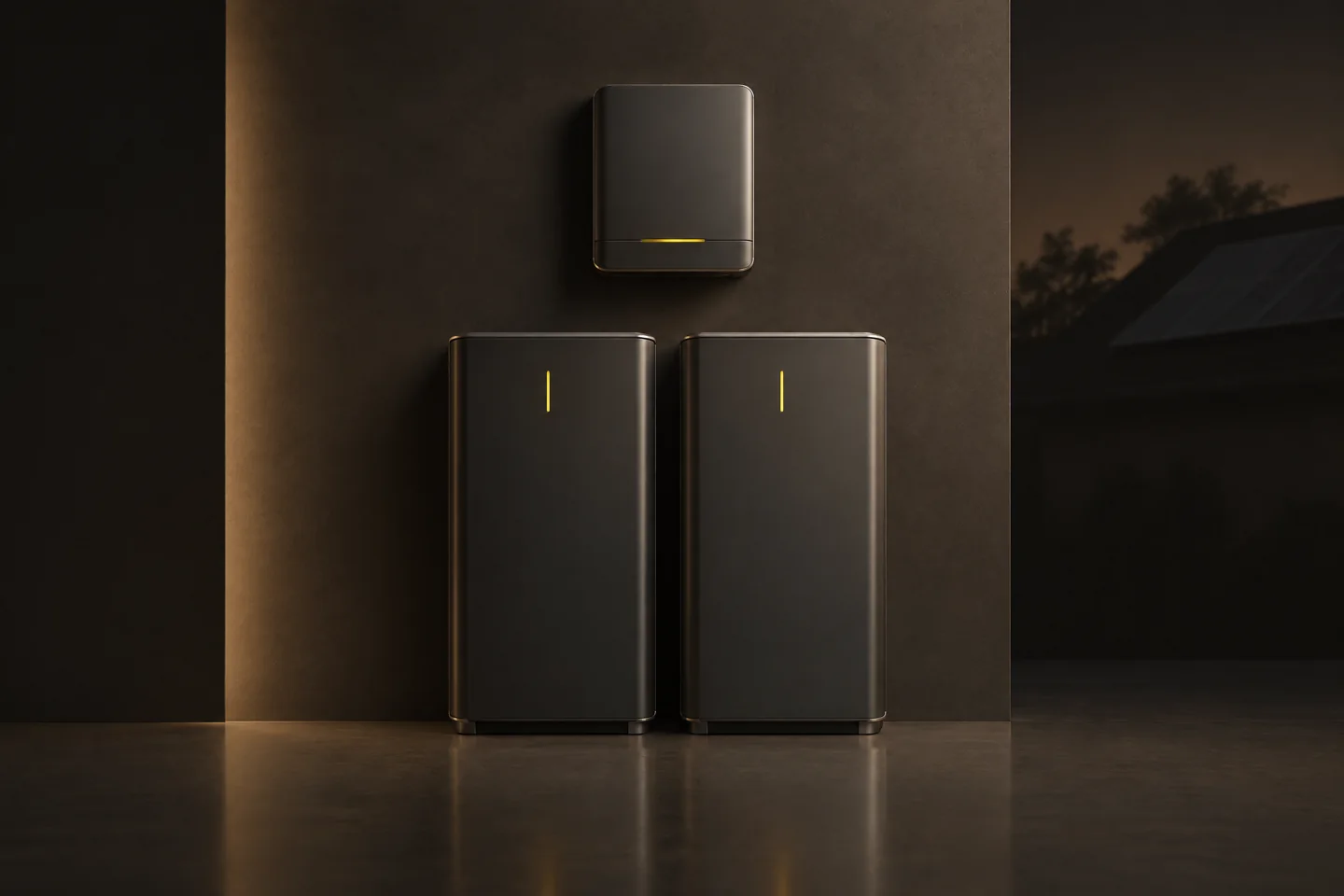
Store it. Use it later.
Solar panels often generate while household demand is low. A battery can store some of that electricity for use later, helping you use more of your own generation. A suitable grid-charged system can also shift purchases to a cheaper tariff period.
Neither option guarantees a saving or makes every home independent of the grid. Useful storage depends on the energy available to charge the battery, how much you use later, the electricity tariff and the system's limits. Charging and discharging also lose some energy.
Compare a combined design with panels-only, rather than assuming storage always pays.
Have your current array, inverter and installation assessed for compatibility.
Discuss a suitable tariff and charging arrangement, including whether the economics work for your home.
Choose a specification, not just a number
How much energy can be stored and used? Ask for usable rather than only nominal capacity, and compare it with typical evening demand and available generation.
How much power can be delivered at one time? Check the battery and inverter limits against the appliances you expect to run. Capacity and output are not interchangeable.
Discuss the existing inverter, electrical supply, safe location, cable route and access. Ask about manufacturer requirements, warranties, monitoring and future expansion.
Backup needs its own conversation
Some equipment and installation arrangements support backup power, while others do not. Ask about supported backup options: exactly what would remain powered, what installation changes are needed and how long the proposed storage could support the selected loads.
Do not assume a battery can run every appliance or keep a whole house powered indefinitely. Ask for backup capability and exclusions in the written specification, rather than relying on a product label or battery capacity alone.
Ask for equipment, integration, siting, electrical work, monitoring and any backup scope to be clearly priced. Compare import/export tariff assumptions, energy losses, how often you would cycle the battery and the warranty/lifespan assumptions.
A battery's life is generally shorter than a solar panel array's, so a long-term comparison should not ignore replacement. No fixed battery price or guaranteed payback is advertised on this page.
Read: is solar battery storage worth it? →Have your electricity consumption and tariff ready if available. If you already have solar, note the array/inverter model and any generation records. Explain whether you want more evening self-consumption, tariff flexibility, backup or preparation for an EV or heat pump.
The solar partner covers South London and Surrey, with selected nearby Sussex, Kent and Greater London areas. Confirm your postcode and the installation location with the partner before deciding on equipment.
Battery storage can be integrated with existing as well as new solar systems, subject to assessment. Compatibility depends on the existing inverter, installation and equipment; a battery is not automatically a plug-in upgrade for every system.
There is no universal size. Compare usable capacity in kWh, output in kW, solar generation, evening consumption, tariff and future loads. A larger battery may not be the best value if you cannot regularly charge and use it.
A compatible battery can be charged from the grid, including on a suitable time-of-use tariff. Whether that is worthwhile depends on the price difference between charging and using electricity, efficiency losses, equipment cost and your consumption.
Not automatically. Some systems can provide backup, but the equipment and installation need to support it. Confirm which circuits can be backed up, the available power, runtime assumptions and any additional work before accepting a quote.
Capacity, equipment, installation location and integration work all affect the quote. Battery storage can increase use of solar generation or allow tariff shifting, but savings are not guaranteed to recover the upfront cost. Ask for a comparison with panels-only or your existing arrangement, including losses and lifespan assumptions.
The independent specialist installer whose identity is shown on the linked partner website handles assessment, specification, quotation and installation directly. Top Volt publishes this guidance and continues to provide its separate electrical services. Your electrical enquiry details are not automatically forwarded by these links.
Sources checked 10 November 2026: Energy Saving Trust battery guidance and solar partner battery information.
A clear next step
Discuss your existing or planned solar system, electricity use and priorities with the solar partner. Ask for an assessed specification and a clear, no-obligation quotation.
Your independent installation partner
Quote and website links take you to our independent installation partner's website, where the business identity and contact details are shown. The partner handles solar assessment, quotation and installation directly, not Top Volt. Their terms and privacy policy apply. Clicking a link does not send your Top Volt enquiry details to them.