Generate. Start with your roof.
Daylight becomes electricity. A roof assessment considers orientation, shading, condition and your usage before proposing a panel layout. It starts with your home, not a standard-size package.
Solar panels & home batteries · South London & Surrey
Explore solar panel installation around your roof, electricity use and future plans. Compare panel layouts and battery choices, then speak directly to a specialist installer for a property-specific quote.
Free, no-obligation quotation. Illustrative stock footage; not a customer installation.
Solar assessment and installation are provided directly by an independent installation partner. Top Volt does not install solar or battery systems; its electrical registration is separate.From daylight to daily life
Three stages. One system designed around the way your home actually uses electricity.
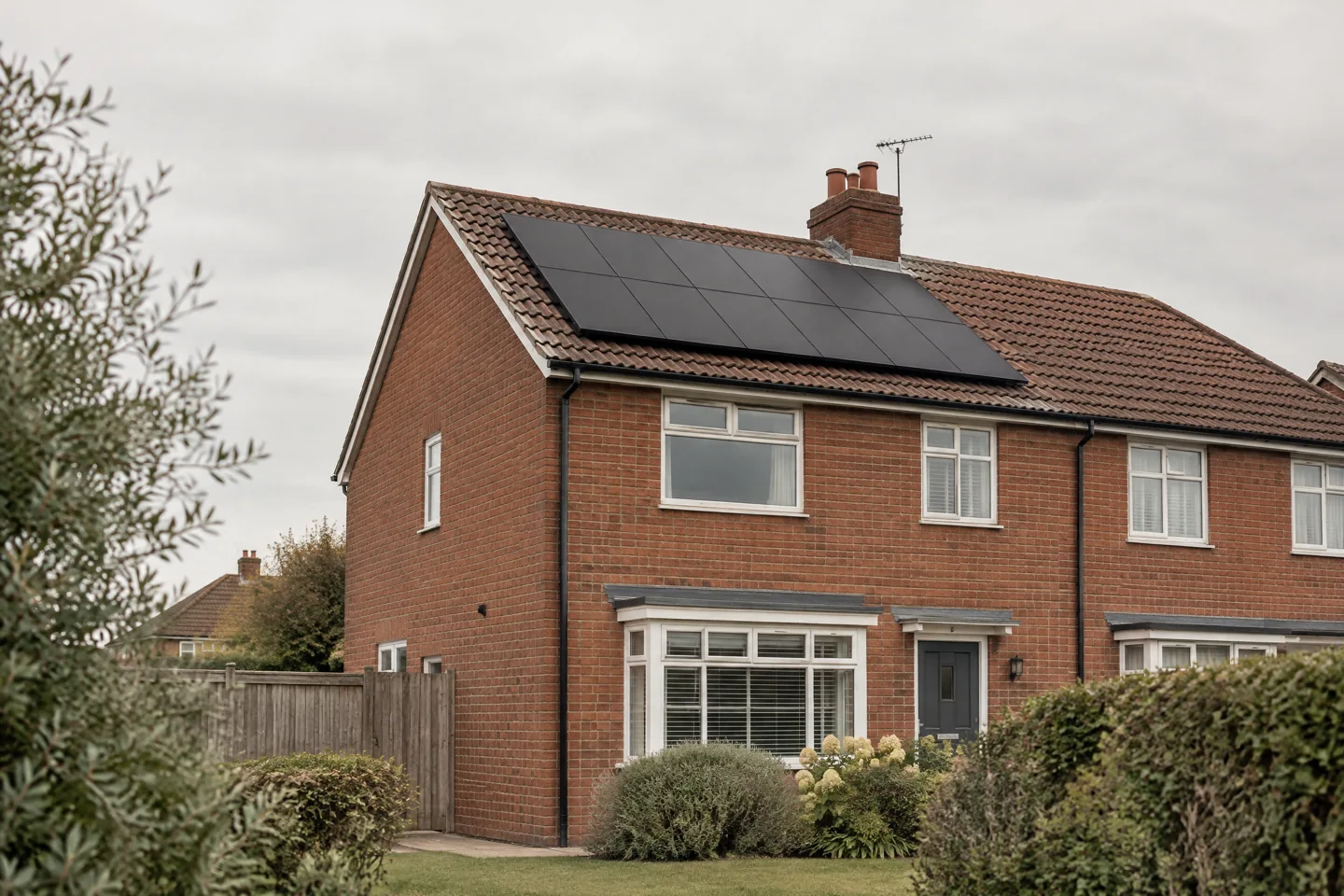
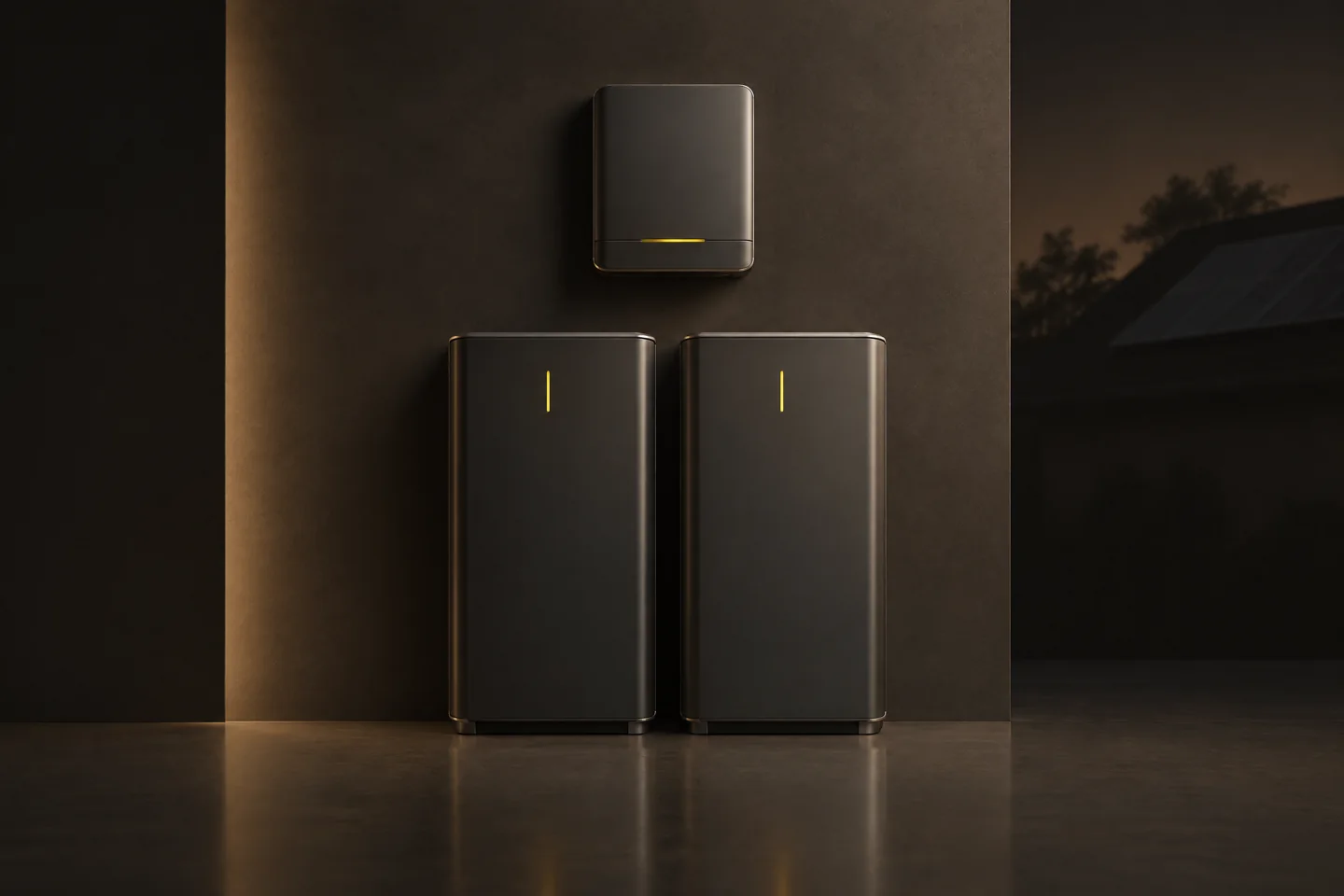
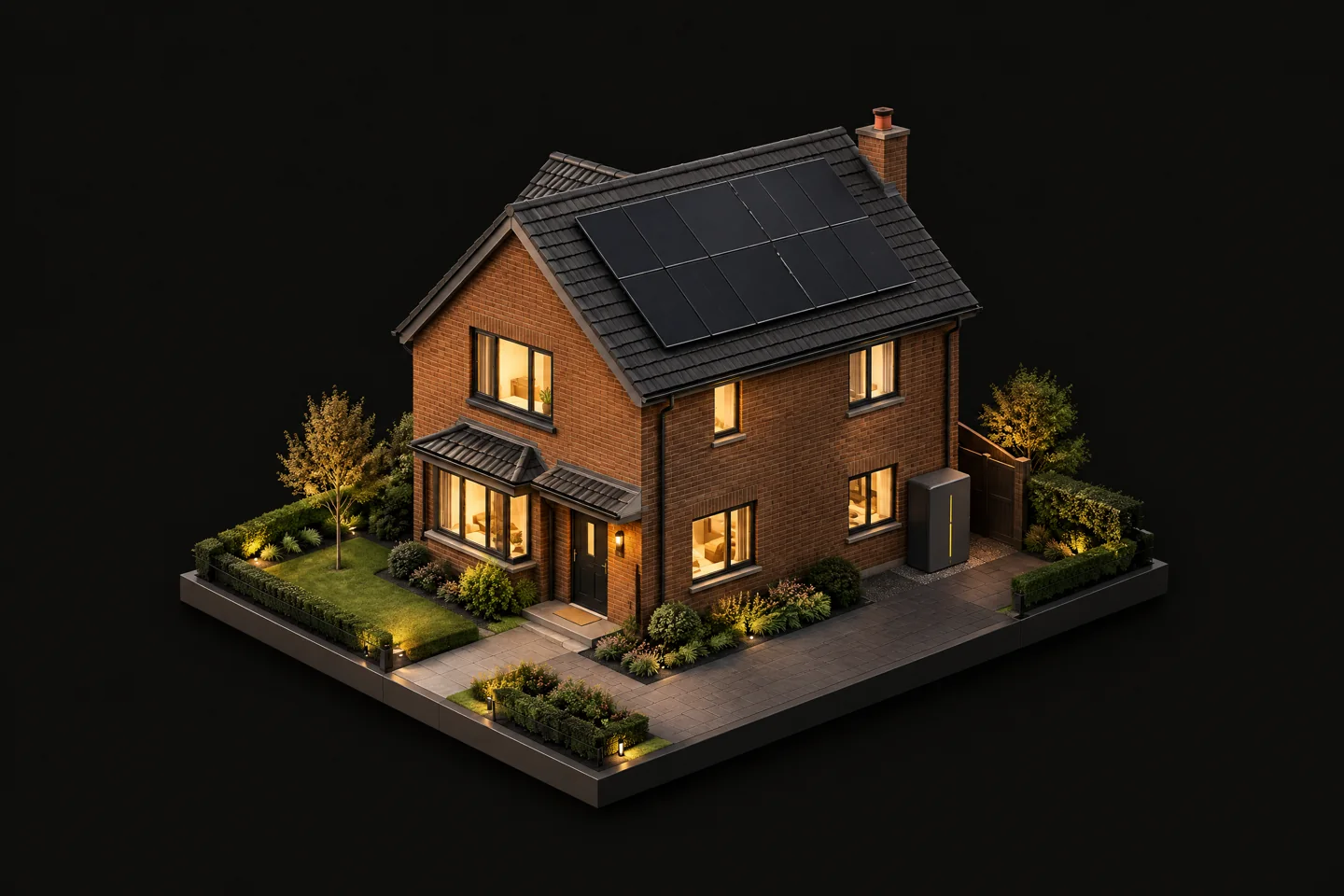
Illustrative visuals, not partner installation photographs.
01 / Generate
Daylight becomes electricity. A roof assessment considers orientation, shading, condition and your usage before proposing a panel layout. It starts with your home, not a standard-size package.
A compatible home battery can keep some generation for later. Compare panels-only and battery options, usable capacity, tariffs and your evening demand — without assuming storage always pays.
Explore battery storage →Share your priorities, existing equipment and future EV or heat-pump plans. The installation partner assesses the property and provides a written specification, scope and quotation. There is no universal saving or fixed payback promise.
Discuss my home and solar options ↗A specialist, clearly introduced
A solar system should work with your home, not against it. Roof condition, available space, shading and how you use electricity should guide the panel layout and the case for storage. Planning an EV or a heat pump? Include that future demand in the assessment.
Top Volt introduces a specialist installation partner rather than supplying a standard package. You deal with that partner directly for design, quotation, installation and aftercare. Top Volt remains your contact for its separate electrical services.
Explore the solar installation service ↗Choose the right starting point
Generate electricity from daylight. An assessment should consider orientation, shading, roof condition and usable space, then compare a panel layout with your electricity use.
View solar installation options ↗Store some daytime generation for later. Compare panels-only and storage options, including usable capacity, tariffs and whether the extra cost suits your consumption.
Explore home battery storage →If you have an EV or are planning a heat pump, discuss it before deciding on an array or battery. Existing wiring, circuit protection and equipment may need assessment.
Discuss future electricity use ↗A day in your energy system
See how solar, compatible battery storage and the grid can work together as daylight changes.
Following scroll. Select a time of day to pause automatic changes.
01 / Daylight
Solar output varies with daylight, weather and the system. Surplus generation can be stored in a compatible battery when its settings and available capacity allow; the grid can cover a shortfall.
02 / Evening
With little or no solar generation, a compatible battery can support household demand if it has usable stored energy. Battery output and system settings matter; the grid may still be needed.
03 / Overnight
A battery may continue supporting the home overnight if usable energy remains. When it is depleted, held in reserve or unable to meet demand, the home needs grid electricity. Backup in a power cut requires a specifically designed system; it is not guaranteed.
Grid support remains available in every view. This is not a zero-bill or guaranteed-backup promise.
Daylight reaches roof solar panels. The solar inverter converts PV electricity from DC for household AC use. Solar can supply the home, and surplus generation can charge a compatible battery. Grid electricity may still be needed. Solar output varies with daylight, weather and the system. Surplus generation can be stored in a compatible battery when its settings and available capacity allow; the grid can cover a shortfall.
As daylight fades, a compatible battery can supply the home through suitable inverter equipment if stored energy is available. Grid electricity may still be needed to meet demand. With little or no solar generation, a compatible battery can support household demand if it has usable stored energy. Battery output and system settings matter; the grid may still be needed.
At night, roof solar does not generate without daylight. A compatible battery can continue supplying the home if usable energy remains; otherwise, or when demand exceeds its output, grid electricity is needed. A battery may continue supporting the home overnight if usable energy remains. When it is depleted, held in reserve or unable to meet demand, the home needs grid electricity. Backup in a power cut requires a specifically designed system; it is not guaranteed.
Educational energy-flow illustration only, not a wiring or installation plan. Actual inverter and battery connections depend on system design, including AC- or DC-coupled storage. The conversion block represents the suitable inverter equipment needed for household use. Battery support depends on compatibility, usable stored energy, output limits and controls. This illustration does not show grid charging or export, and does not predict charging amounts, savings or backup performance.
Your solar design, one decision at a time
A guided solar panel and home battery explorer. Start with a roof estimate, try a panel layout and see how stored energy could support an example evening. This is a learning tool, not a survey or quotation.
Example assumptions are shown below. Enable JavaScript to adjust this design; no aerial lookup runs until you choose “Load aerial view”.
01 / Find your starting point
Use an optional satellite address view to orient yourself. Look for roof edges, chimneys and nearby trees, then enter your own estimated dimensions in the next step. You can also skip the map entirely.
Only when you click, your entered address is sent to the Google Maps provider via the maps service, not to Top Volt or the quote partner. The address stays in this page’s memory: this explorer does not save it, add it to analytics or include it in a quote link.
No map has been loaded.
Open this address in Google Maps instead ↗It does not measure your roof, identify usable roof space or assess shading, condition or structural strength. Check that the address result is the right property. Imagery may be out of date.
Direction. Shade. Condition.
Three things a proper assessment needs to check.
02 / Shape an example array
Estimate one rectangular roof face along its surface, not the whole property footprint. This portrait-only example leaves space at the edges. Change the dimensions, then remove panels where you want to leave a gap.
6 × 4.5 m estimated roof face; 0.3 m clearance on every edge; each panel 1.72 × 1.13 m, with a 0.02 m gap. Assumed panel rating: 0.43 kWp per panel, not a brand or specified product.
The rectangular fit uses floor((usable dimension + gap) ÷ (panel dimension + gap)) on each axis. No automatic roof identification or aerial measurement. Obstacles, roof geometry, access, fixing zones, shading and structural suitability may reduce the actual layout. This does not guarantee panels fit.
No panels fit this rectangular example. Try a larger roof estimate.
Click a panel position to keep or remove it. Bright outlines are selected.
03 / Make storage make sense
Storage needs energy to charge it and demand to use it. Try an example usable capacity, then change your assumed surplus and evening demand. These inputs are independent of the panel layout: we are not predicting solar generation.
Your own assumption about electricity available to charge the battery, not a measurement or a solar generation prediction.
Starts with no stored energy. Assumes a compatible system and 90% storage-path efficiency. Delivered energy = min(assumed surplus × 0.9, usable battery capacity, evening demand). Uncovered demand = max(0, demand − delivered energy).
Initial example: 10 kWh usable capacity, 6 kWh daily available surplus and 8 kWh evening demand.
Educational scenario only. Actual results also depend on charge/discharge power, reserve settings, equipment, losses and household timing. Uncovered demand needs another supply, usually the grid. This is not a savings, payback, annual generation or power-cut runtime forecast.
Illustrative equipmentExplore your roof, not a standard package
Scroll through the three design questions, or choose a topic to explore it. This is an explanation of what to discuss, not a remote roof survey.
An unshaded south-facing roof generally performs best, but other orientations can still be suitable. An assessment should consider pitch, usable space and a proposed layout rather than judging your home from one compass direction.
Nearby trees, chimneys and neighbouring buildings can shade different parts of a roof at different times. A property-specific assessment should explain how shading has been allowed for in the generation estimate.
Roof condition, access and any planned roof work matter. Discuss existing tiles, structural suitability, safe installation access and future maintenance before choosing the final panel arrangement.
Roof suitability and realistic savings
Solar panels can work on cloudy days, but output changes with daylight and the seasons. An unshaded south-facing roof generally performs best; other orientations can still be worth assessing. Roof condition, pitch, nearby trees and safe access matter as well as the number of panels that might fit.
More roof coverage is not automatically a better investment. Ask how the proposed array relates to annual consumption, daytime use and likely future demand. Panel capacity is expressed in kWp; annual generation is expressed in kWh. Neither is a guaranteed reduction in your bill.
Costs and savings are property-specific. We do not advertise guaranteed savings, free installation or fixed payback.
Read the South London & Surrey solar cost guide →A guided first conversation
Tick what you already know. The checks stay selected while you explore this page, so you can see what is left to discuss. You do not need all the answers to request a quote.
This checklist prepares a conversation; it is not a roof survey or a savings forecast. The installation partner assesses your address and design options directly.
0 of 3 preparation steps ticked
Continue to a specialist solar quote ↗No address, energy consumption or other customer details are collected or passed by this checklist.
From questions to a written design
Share the property location, roof details, electricity use and why you are considering solar. Start even if consumption figures are not yet available.
Review the proposed panel arrangement, roof or electrical constraints, and the case for a battery. Ask what can change and what the design assumes.
Compare the written price, equipment, work included, exclusions and warranty terms. Confirm address coverage and the proposed programme.
Discuss access, applicable approvals and grid paperwork, testing, monitoring and the documents you should receive. Confirm aftercare directly with the installer.
Local solar conversations
Published partner coverage includes Surrey and London, with Sutton, Croydon, Epsom, Banstead, Purley and Coulsdon among the named areas. Selected Sussex, Kent and Greater London locations may also be covered. Confirm your postcode rather than assuming every South Coast address is included.
Check solar installation coverage ↗These are Top Volt electrical-service pages. Solar assessment and installation are supplied by the separate partner.
Is solar battery storage worth it? →Top Volt introduces a separate specialist solar installer, whose business identity and contact details are shown on the linked partner website. You request assessment, quotation and installation directly from that partner. Top Volt's electrical registration is not a claim that it holds the installer's solar certification.
The installation partner's published coverage includes Surrey and London, including Sutton, Croydon, Epsom, Banstead, Purley and Coulsdon. Selected Sussex, Kent and other Greater London locations may also be covered. Confirm your postcode before deciding on a system.
Solar panels can generate electricity on cloudy days, although output depends on available daylight. Winter generation is usually lower than summer generation. Roof orientation, shading, usable roof area and system design all affect the estimate for your home.
An unshaded south-facing roof generally performs best, but another orientation may still be suitable. A property-specific assessment should consider roof condition, pitch, shading and panel layout rather than judging the home from orientation alone.
Battery integration can be assessed for new and existing solar systems. Compare panels-only and panels-plus-battery options, and discuss future compatibility. Appropriate usable capacity depends on available generation, electricity use, tariff and equipment.
A property-specific quote is needed. Roof access, array size, inverter, battery choice, electrical work and scope affect costs. Savings depend on generation, self-consumption, tariffs and other assumptions. Neither the graphics nor the planning examples on this page promise a saving or payback period.
No. Quote links take you to the installation partner's website, where you choose what to submit under its privacy policy and terms. The optional aerial viewer uses the map provider only when you request it; that address is not added to partner links or automatically sent as an enquiry.
Independent guidance: Energy Saving Trust — solar panels. Planning examples do not replace a property-specific assessment.
A clear next step
Discuss a system designed around your roof, electricity use and future plans. Request a free, no-obligation quotation from the specialist installation partner.
Your independent installation partner
Quote and website links take you to our independent installation partner's website, where the business identity and contact details are shown. The partner handles solar assessment, quotation and installation directly, not Top Volt. Their terms and privacy policy apply. Clicking a link does not send your Top Volt enquiry details to them.